Stadiums of
World Cup 2026





 Host Cities
Getting Around: Your 2026 World Cup Stadium Navigation Guide
Forty-eight teams. Eleven stadiums. One continent-wide tournament that will test your logistics as much as your team's nerves. If you're planning to attend matches at the 2026 FIFA World Cup in the United States, getting from point A to point B deserves as much attention as your ticket strategy.
The 11 US Host Venues
FIFA spread the stadiums across three broad regions: Western (Seattle, San Francisco Bay Area, Los Angeles), Central (Houston, Dallas, Kansas City), and Eastern (Atlanta, Miami, Boston, Philadelphia, New York/New Jersey). That range, from the Pacific Northwest down to South Florida, is enormous. Plan accordingly.
Atlanta (Mercedes-Benz Stadium): Downtown Atlanta, near Centennial Olympic Park. Approximate capacity: 75,000.
Boston (Gillette Stadium): Foxborough, Massachusetts, roughly 25 miles southwest of the city. Accessible by highway and commuter rail. Approximate capacity: 65,000.
Dallas (AT&T Stadium): Arlington, Texas, sitting between Dallas and Fort Worth near major interstate junctions. Approximate capacity: 94,000.
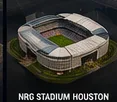
Houston (NRG Stadium): South of downtown Houston within the NRG Park complex, adjacent to the old Astrodome. Approximate capacity: 72,000.
Kansas City (GEHA Field at Arrowhead Stadium): Southeast of downtown in the Truman Sports Complex, shared with Kauffman Stadium. Approximate capacity: 73,000 to 76,640.
Los Angeles (SoFi Stadium): Inglewood, California, near LAX and about 30 minutes from Pasadena. Approximate capacity: 70,000.
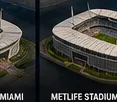
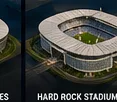
Miami (Hard Rock Stadium): Miami Gardens, northwest of the city center near major highways. Approximate capacity: 65,000 to 67,500.
New York/New Jersey (MetLife Stadium): East Rutherford, New Jersey, just west of Manhattan inside the Meadowlands Sports Complex. Approximate capacity: 82,500 to 87,157.
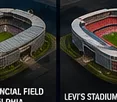
Philadelphia (Lincoln Financial Field): South Philadelphia, across the Schuylkill River from downtown, clustered with the city's other major sports venues. Approximate capacity: 69,000.
San Francisco Bay Area (Levi's Stadium): Santa Clara, deep in Silicon Valley, about 45 minutes south of San Francisco. Approximate capacity: 70,909.
Seattle (Lumen Field): Right in downtown Seattle along the waterfront near Pioneer Square. Approximate capacity: 69,000.
Toronto, Vancouver, and other Canadian venues have their own transit picture. Check out the Canadian World Cup Stadiums guide for those specifics.
Getting to the Stadium
No two host cities handle match-day crowds the same way. Some have robust rail networks built for exactly this kind of volume. Others are car-dependent suburbs where 80,000 people arriving simultaneously turns nearby highways into parking lots.
Transit, Driving, and Rideshares
New York and Philadelphia are your most transit-friendly options. The MTA runs dedicated Meadowlands rail service to MetLife, and SEPTA's regional rail reaches Lincoln Financial from Center City in under 30 minutes. Seattle's Sound Transit light rail drops you directly at Lumen Field. Boston's MBTA commuter rail connects South Station to Foxborough, though service is limited on non-game days.
Los Angeles has Metro rail and bus options to SoFi via shuttles from Expo Park, but coverage thins out quickly once you leave the main corridors. Kansas City and Houston offer event-day bus enhancements, though neither city has the rail density of the Northeast. Buy reloadable fare cards before you travel and check real-time schedules through each city's transit app.
Driving to suburban venues like AT&T, Gillette, or Hard Rock means accepting serious congestion. On-site parking runs $50 to $200-plus and requires advance booking. Park-and-ride lots with dedicated shuttles are the smarter play: METRO park-and-rides for NRG in Houston, BART remote lots for Levi's in the Bay Area. Traffic restrictions and no-tailgating rules will be in effect at most sites.
Uber and Lyft will operate designated drop zones, typically 0.5 to 1 mile from stadium entrances. Surge pricing after the final whistle is predictable and steep. FIFA plans official shuttles from fan zones, airports, and transit hubs, including NJ Transit service to MetLife and Caltrain connections to Levi's. Book through the app whenever possible.
Arrival, Entry, and Getting Out
All 11 US venues are operating under FIFA security standards. That means bag checks, metal detectors, and pat-downs at every gate. Clear bags only, maximum 12x6x12 inches. Drones, weapons, and large banners are prohibited across the board.
Gates, Security, and Finding Your Seat
Arrive two to three hours before kickoff for marquee matches. Gates are section-specific: numbered at MetLife, color-coded at SoFi. Digital tickets through the FIFA app will speed up entry considerably compared to printed passes.
Inside, concourses run 30 to 50 feet wide with LED directional signage throughout. Mercedes-Benz in Atlanta and AT&T in Dallas both use large video boards for crowd orientation, which helps when you're trying to find your section in a 90,000-seat bowl. ADA seating covers roughly 5 to 10 percent of capacity at each venue, with ramps, elevators, sensory rooms, and staff assistance available at all sites.
Leaving After the Match
Follow the LED-lit exit routes toward transit hubs or designated rideshare zones. Lumen Field's pedestrian bridges help disperse crowds faster than most venues. Budget 45 to 90 minutes for full dispersal after high-profile matches, and keep the official FIFA app open for real-time exit updates.
Traveling Between Host Cities
Seattle to Los Angeles is over 1,100 miles. Miami to New York is about 1,280. If your itinerary crosses regions, flying is the only realistic option. Book at least six months out.
Flights and When to Consider the Train
Cross-region flights typically run one to three hours: LAX to DFW is roughly three hours, while Miami to Seattle pushes six. The airport-to-stadium distances vary: Atlanta's airport is about 15 minutes from Mercedes-Benz, while Gillette sits 25 miles from Boston Logan. Build in three to four hours of buffer around tournament matches when connecting flights are involved.
For the Northeast, Amtrak's Acela corridor between Boston, New York, and Philadelphia is genuinely competitive with flying once you factor in airport hassle. The trip runs four to six hours depending on your stops. Greyhound and FlixBus cover the same routes at lower prices. West of the Mississippi, ground travel between host cities isn't practical for most schedules.
The official FIFA World Cup 2026 host cities page has the full schedule breakdown by city and date.
If your itinerary dips south of the border, the Mexican World Cup Stadiums guide covers the logistics for those venues separately.
Start Planning Now
The fans who struggle at this tournament will be the ones who treated logistics as an afterthought. Book transit passes early. Know which gate your ticket assigns you to before match day. If you're crossing regions, get your flights locked in well ahead of the draw. The football will take care of itself. Getting there and back is entirely up to you.
FAQ
How early should I arrive at a 2026 World Cup stadium on match day?
Two to three hours before kickoff for major matches at high-capacity venues like AT&T or MetLife. For smaller crowds, 90 minutes is a reasonable floor.
What are the best public transit options across the host cities?
MTA and NJ Transit for New York/New Jersey, SEPTA for Philadelphia, MBTA for Boston, Sound Transit for Seattle, Metro and BART for Los Angeles and the Bay Area. Use event-day shuttles for suburban venues where rail doesn't reach the stadium directly.
Can I just drive and park at the stadium?
Technically yes, but parking is limited, expensive ($50 to $200), and requires advance booking. Traffic restrictions will be severe. Park-and-ride with a shuttle is the better option at most venues.
What accessibility services are available?
All FIFA-compliant venues offer ADA seating, ramps and elevators, accessible restrooms, sensory areas, and companion policies. Contact individual venues for specific accommodation requests.
What's the smartest approach for traveling between multiple host cities?
Fly for anything crossing regions, use Amtrak for the Northeast corridor, and book everything at least six months out. Check airport-to-stadium distances before finalizing your itinerary since they range from 10 minutes to 45 minutes depending on the city.